Tom was a star athlete. When he was just a freshman in high school, he made it to the state final in Track and Field. He ran against upperclassmen and veteran competitors. In his final race, to everyone’s surprise, Tom finished 5th place! Given his young age, Tom was thrilled with the result, so were his coaches. But as he climbed onto the podium, there was just one face he wanted to see, his father’s. When he looked up into the stands, while his mom was smiling and cheering, his dad was looking down at his stopwatch, obviously disappointed his son didn’t place higher. He didn’t clap, he didn’t cheer, he only disapprovingly shook his head. Twenty-five years later, and having just buried his dad, Tom tells this story with tears in his eyes. He ran for his father’s approval, but he didn’t get it.
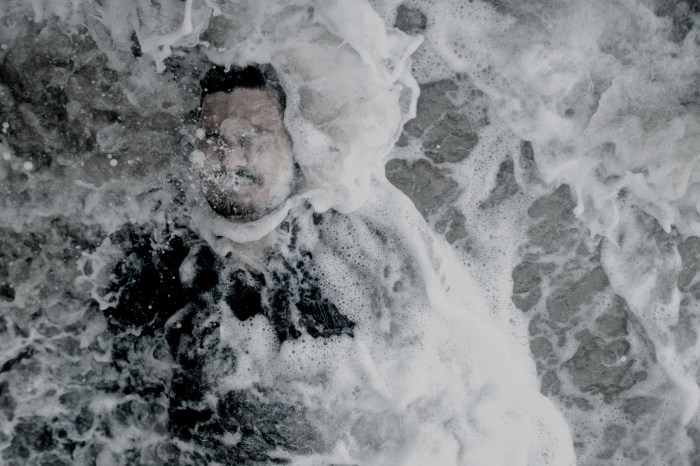
In the Bible passage today, Mark 1:9-11, we want you to follow the eyes of Jesus, because they are quite telling. It starts, “In those days Jesus came from Nazareth of Galilee and was baptized by John in the Jordan” (9). Although we’ve been focussing on John the Baptist, the spotlight now turns to Jesus, who has already been declared the Son of God (1:1). Much to our surprise, the Son of God lived in a small town called Nazareth, population 120. He left his small town to go to the Jordan River in order to be baptized by John the Baptist, just like everyone else. As Jesus waded into the slow, muddy water, he showed us we were all in this together. By being baptized, Jesus identified with the suffering and need of the human race. God was one of us.
But now follow his eyes. Verse 10 reads, “And when he came up out of the water, immediately hesaw the heavens being torn open and the Spirit descending on him like a dove.” Who saw? Jesus did. Where did he look? He looked to the stands, so to speak, to look for his Father. Like Tom, like you, and like me, even the Son of God sought his Father’s approval. “…he saw the heavens opened…” because he was looking for the only Face that mattered to him at that moment.
His Father was not looking down at his stopwatch in disapproval. In fact, his Father couldn’t wait to show his Son approval. The text says, “…immediately he saw the heavens being torn open and the Spirit descending on him like a dove.” Picture the start of a college football game. There’s a banner at the corner of the field with the name of the hometeam painted on it. Then suddenly, immediately, the home team comes bursting through the sign, tearing it open, rushing onto the field. That’s like what Jesus saw. His Father tore through the heavens as if they were a sheet of butcher paper and rushed upon the field to be with his Son. Since God is Spirit, he had to take the form of a physically visible creature, in this case, a dove.
It’s interesting to note another scene in the Bible that connects a dove with water and a voice from heaven. In Genesis 9, at the end of the flood story of Noah and the ark, there is a dove, water, and a voice from heaven. All three came together when Noah was trying to determine if it were safe to walk the earth again. Here in Mark 1:9-11, it’s as if we’re being told that Jesus is the new ark, upon which humanity can be saved.
There’s a difference, however, between this story and a story like Tom’s. And it’s an important difference to grasp. Jesus hadn’t yet done anything to merit either approval or disapproval. Tom had already won his race and finished his season; Jesus had yet to start. The race for Jesus was a difficult and dangerous course, which would culminate on a cross. Here on the banks of the Jordan River, Jesus was at the start of the race, warming up. His first hurdle would be his battle with Satan in the wilderness (1:12-13), which we’ll talk about next time.
Does it surprise you, then, that his Father would call out to him, “You are my beloved Son; with you I am well pleased” (11)? Again, Jesus hadn’t yet done anything. The story just began. Jesus hadn’t yet faced any enemies, overcome any obstacles, or performed any miracles. As far as the story goes, he was just a thirty year old carpenter from Hicksville, Nazareth, hardly worth the applause of God.
Typically, we believe merit should come first and then approval. You win a race; then you get a medal. You work hard for a week; then you get a paycheck. You do well on a test; then you get an A. But the mischievous Father in heaven flips it around. You get approval; then you run the race. You get approval; then you do your ministry. You get approval; then you do your job. Pretty mind blowing, isn’t it? But it had to be this way.
How else do you think Jesus was able to do all he had to do? He had to have his Father’s approval first. Think of what Jesus had to go up against (all these are found in the book of Mark). Jesus would battle the devil; choose his disciples to carry his message to the ends of the earth; cast out demons; heal the sick; preach to the masses; cleanse lepers; heal paralytics; forgive sins; argue with religious leaders; heal a man with a withered hand; calm a storm; walk on water; heal a bleeding woman; raise a dead girl; face the rejection of his hometown; mourn the beheading of his friend; feed several thousand, twice; make the deaf to hear and blind to see; be falsely accused; be plotted against; be betrayed; be forsaken; be arraigned and tried in court; be spit upon; be tortured; be mocked; and be crucified. How in the world did he do all that? In great part, because he had his Father’s approval right at the beginning. Throughout it all, he could still hear the echo of his Father’s voice cheering him on, “You are my beloved Son! With you I am well pleased!” Then he could take another step.
And if this is how life works for the Son of God, then who are we to think we’re any different? The only way you can make it through your difficult journey is if you know the Father’s approval first. Otherwise, you’re sunk. There’s nothing you cannot do or endure so long as you have the Father’s approval. It’s all you need to get through whatever hell you’re in right now. Betrayal? Backstabbing? Abuse? Personal failure? You can make it through your rough course if you hold on to God’s loving approval. He says to you, “You are my beloved child; with you I am well pleased.”
Your good works don’t merit God’s approval; rather, God’s loving approval of you merits your good works. Now, with the love of your heavenly Father descended upon you as a dove, go and live your life for him.
The Breakdown
Carefully read Mark 1:9-11. What strikes you the most?
What does the word “approval” mean? Look it up in a dictionary.
Would you rather have approval before you earn it or after you earn it? Why do you think God gives us approval first?
Pray and search your thoughts, ask yourself about the areas in your life you’re seeking the approval of others. What would it mean if you knew God himself approved you? What would it mean if you approved you, too?
The pandemic has us at home, out of our routines, and with extra free time. As a result, you may be struggling with porn more than usual. So let’s take some time to talk about it. The Bible verses in Mark 1:1-8, perhaps surprisingly, can help us a great deal in this area. Let’s pause at Mark 1:8 and let the power of this text grab hold of us. Before Jesus arrives on the scene in verse 9 (we’ll talk about that in the next post), we’re brought into the dramatic world of John the Baptizer, who called people to confession and repentance. It’s a world, quite frankly, most Christians today are unfamiliar and untrained. But we need to open up the door to this world and live in it for a moment.
As people came to the water to be baptized, they recognized their true condition and didn’t hide behind fake self-righteousness, good works, or glowing masks. To be in this world of John the Baptist, you have to strip everything away, until you’re left with nothing but the cold, hard truth about your situation before God. In case you were tempted to skip over this part, it’s no joke, this is the necessary work you need to do in your fight against porn. Remember, when you give him your sin, he gives you his Spirit. “I have baptized you with water, but he will baptize you with the Holy Spirit” (1:8).
Deranged Clown’s Prisoner
The more you recognize your sin, the extent of it, and your mad desire for it, the more God will give you his Spirit. Sin will lose its power and you will gain power. There’s a short video you’ve got to watch first, then I’ll explain more. It’s a comedy sketch by Key and Peele, called Being a Deranged Clown’s Prisoner. Go ahead and watch it now. We’ll wait…
We’re going to put this as bluntly as possible: in your battle with porn, you are a deranged clown’s prisoner. That deranged clown is you. And it’s not you. At the same time. So long as you’re alive, you’ll never escape.
The deranged clown is the part of your nature that has gone rogue. You can’t control it and it does whatever it pleases. It’s desire is for everything you don’t like and that’s against your desire to follow God. If you want purity, it wants porn. Recall Key and Peele sitting in the cold, disgusting prison, blood-splattered everywhere, chained to the walls. They are at the whim of the deranged clown, waiting for him to return and have his way with them. This is the best picture we can paint for you of your battle with porn. The desire comes and goes, seeks to torture you, and the more you feed it, the more power it gains—however, the way you feed it is not how you might think, but we’ll get to that.
This is going to be a long post, because there are no quick answers.
You’re Not Free
The first thing you’ve got to accept is that you’re stuck in that prison. This might come as surprising news, but welcome to the world of John the Baptizer, the world of true confession and repentance. If you’re going to make any progress in your battle against porn, you must first realize that the battle will never go away. You’ll never be free. Perhaps someone once told you that you could be free. Maybe you keep telling yourself, “One day, I won’t have this struggle; I’ll be holier and be able to conquer porn.” That’s a load of shit. So long as you’re alive in this world, you will have what the Bible calls a sin nature, the rogue clown. And he’ll be just five feet away from you the rest of your life. Any different teaching is pure deception. Welcome to the jungle.
Another Way to Fight
Key (in Key & Peele) put it this way in the sketch, “There’s kind of a positive in having no options, because, you know, we’re not even going to try to escape, because we know we’d fail.” Your battle against porn is not about escaping it, but about learning how to deal with the deranged porn clown when he shows up. Man, this is so essential to get, so re-read that last sentence. We must accept the struggle in which we find ourselves, for only then will we be able to learn to fight another way (other than escape).
But beware, the porn clown is always watching you through the jail cell window. The Bible puts it just as vividly when it says, “Be sober-minded; be watchful. Your adversary the devil prowls around like a roaring lion, seeking someone to devour.” (1 Peter 5:8). Here’s why this is an essential truth for you to grasp about your situation, because you can’t deal with the porn clown by avoiding him or trying hard to abstain. This is called “white-knuckling it.” See if you can relate. You decide to give up porn, because you know it’s ruining your life. You vow never to look at it again. You try your absolute hardest. You avoid computers; you put passcodes on your devices; you get an accountability partner; you go on long jogs to release energy; you try to stay busy; you don’t watch R-rated movies. But then, two days later, you look at porn! You think, “I can’t believe porn came back!” But guess what? The porn clown never left! And now, he’s pissed! Remember, you’re like Key and Peele chained to the wall, so ask yourself, what good would it have done for them to close their eyes and pretend the clown wasn’t there any more? What good would it have done for them to say they’d never look at the porn clown again? They’d be like children pretending the blanket would protect them from monsters.
In one sense, it’s like a man telling himself he’ll never eat again, or be hungry again. Just as hunger is good and normal, so are your sexual urges. They are not leaving you (thank God!) and the porn clown will continue to attack them (and derange them) so long as you’re alive.
We Don’t Have a Free Will
Much to our chagrin, we do not have a free will. It’s chained and bound to a bloody wall, haunted by a painted, maniacal enemy. Oh, sure, we have a free will when it comes to choosing insignificant things, like what we’ll wear to work or when we’ll go to sleep at night. But when it comes to choosing God or choosing porn, our wills are locked to the prison wall. We may get away a few times with abstaining from porn—a few weeks or months here and there—but don’t be deceived, the clown will be back.
Summing It up
Let’s take a moment to summarize. You are in a prison. In the prison there’s a deranged porn clown. He’s trying to tear you apart, limb by limb. There’s nothing you can do to escape. Got it?
Avoiding and Hiding
Now, let’s think about the usual ways we deal with porn: avoiding it or hiding it (after we do it). Again, can you relate? You try your hardest to avoid, avoid, avoid. There’s a thousand methods we’ve come up with to avoid porn, everything from computer software to putting a rubber band on our wrist and snapping it when we’re tempted. We’re not discounting these methods, but there’s so much more we can do. Second, if/when we are unsuccessful at avoiding porn, then we hide it. We cover it up and lie about it. We pretend we didn’t fail. All the while, the clown grows bigger and bigger in our lives.
Instead of avoiding and hiding (or white-knuckling and sneaking), let’s learn from John the Baptist. He says to confess and repent. If you want to start making real progress in your battle against porn, then learn to confess and repent, rather than avoid and hide.
Confession
First, let’s learn about confession. Believe it or not, this is what Key and Peele did in the sketch. If this surprises you, then you probably don’t know what true confession is. The word “confess” means to acknowledge or agree. In a comical way, Key and Peele were in agreement with the clown. When the clown tries to terrify them, they beat him to the punch. The clown laughs menacingly, “No one has ever suffered, as you will!” Then he whips out a rusty power saw to cut them to pieces. One of the prisoners calmly replies, “That’s a great saw…if you’re cutting off legs, that is the way to go.” The clown shrinks back, dumbfounded. Back and forth they go; the more the clown tries to terrify them, the more they acknowledge what he is doing and agree with him. They anticipate what the clown is up to and validate his efforts. Soon the clown can’t take it anymore and screams out, “Make it stop! This is torture!”
True confession tortures the devil. Did you know that?
Here’s a truth worth memorizing right now: if you can’t talk about something, or acknowledge something, then it has power over you. The more you avoid or hide it, the more it grows in power. The more you pretend it doesn’t exist, the scarier it becomes to you. This is true for many things, not just your fight against porn. True confession lances the infection so it stops its painful swelling. True confession causes the deranged clown to shrink away and lose power over you.
How could this look in your battle with porn? When the porn clown begins to tempt and torment you, turn to him and say, “It’s true, Iconfess, I’d really love to look at porn right now. In fact, here are the ten websites I’d like to look at. Here are the kinds of things I’d like to see. And here’s what I’m planning on doing while I’m looking at them. And wait, there’s more! Here are some other porn fantasies I have…I confess, my heart is always intent on finding illicit content in which to indulge. Given the chance, I would sneak away by myself, so nobody would catch me; I would stay up late and pretend to be working on something else, meanwhile, I’d search for nude images; I’d spend all day, if I could, indulging in porn. I admit to all of this and more.”
Map out your fantasies before yourself and God; stop pretending you’re “better” than you really are. Acknowledge the desires and machinations of the diabolical clown, both thoroughly and precisely. “I’d really like to do or see X right now; I’d really like to do Y if I could get away with it.” Acknowledging, admitting, and confessing the truth will set you free. The Spirit descends upon the one who is truthful, making you only as strong as you are honest. We’ll see the ultimate example of this in the Lord Jesus Christ in the next portion of Scripture we study, Mark 1:9-13.
Know what your inner deranged porn clown is up to and say what it wants to shrink its power. Confess, confess, confess, until he limps back into the corner and gives you reprieve. God gave you an imagination so you could stay five steps ahead of your sin nature, to keep track of it, before it takes you by surprise and devours you. If you satisfy the desires of the deranged clown in your imagination first, then there’s much less of a chance you will act out these desires in real life.
Repent
The second great aspect of John the Baptist’s message is to repent. Remember, instead of whiteknuckling and sneaking (avoiding and hiding), we’re going to confess and repent. The word repent means “to change your mind.” You may be tempted to define this superficially, which most Bible teachers erroneously do! The superficial definition goes like this: to change your mind means something like, “I was going left, but then I turned around and went right.” Or, putting it into our context, “I was going to look at porn, but then I didn’t.” As we said, these are superficial takes on metanoia, the Greek word for repentance.
When John the Baptist speaks of repentance, he doesn’t mean simply to change your final decision; rather, he means to change your actual mind. Morph your thinking. To repent means to change your mindset about life, God, and yourself. This definition leaves room for mistakes, for wrong turns, and for the inevitable slips of judgment. But it frees you to embrace whatever life throws at you. Think about Key and Peele in the prison; their entire disposition was that of “embrace.” No matter what the clown threw at them, they found a way to accept it. Comically, when the clown threatened to light one of them on fire, for instance, the other responded, “That’d be nice, because I was just thinking it was getting a little chilly in here.” These two prisoners are poster children for Reinhold Neibur’s serenity prayer! “God, grant me the serenity to accept the things I cannot change, the courage to change the things I can, and the wisdom to know the difference.” When you can’t change your situation, you can change your mindset about your situation. To change your mindset about porn, therefore, would be to embrace the lifelong struggle with the porn clown, to change the way you handle temptations and failures, and to learn the difference between symptom and cause.
Symptom vs. Cause
Here’s what we mean by the last statement. We believe the actual viewing of porn mainly to be a symptom, rather than the disease, itself. In other words, if you’re trying to overcome porn addiction merely by attacking the actual viewing of porn, then you’ll have limited, if any, success. Don’t get us wrong, you should stop looking at porn! However, if that’s all you focus on, you won’t get to the root of the problem. Think about the coronavirus. If you said you could “cure” the coronavirus by lowering someone’s temperature and giving them a throat lozenge to alleviate coughing, then you’re an absolute nitwit. Treating the symptoms is not the same as attacking the virus.
In the same way, there’s something else going on in the life of the porn user. Viewing porn is the symptom of a deeper disease. This deeper disease is manifesting itself as porn use. This is one of the reasons why porn use is so hard to break, because the user thinks superficially about his problem. He focuses on the actual viewing and fails to do a deep dive into understanding what’s driving his viewing. Again, to repent of porn is not merely to change your mind about whether to view it or not, but repenting of porn is to embrace the lifelong struggle with the porn clown, change the way you handle temptations and failures, and learn the difference between symptom and cause.
The Deeper Disease
So what is the deeper disease? It is the rejection of self, the rejection of God, and the rejection of others. This fundamental rejection of God, self, and others, is what fuels our desire to look at porn. Put another way, if you want to reduce the symptoms, in this case, looking at porn, then you have to repent of feeding the clown. Most of us don’t know what feeds the clown and we are unaware of when we are doing it! But we must stop feeding the clown, so he loses power.
Clown Food
The first serving of clown food is rejection of self. There are many ways in which you may be rejecting yourself, and each of these ways feeds the deranged porn clown. We reject the things we don’t like about ourselves. Some might not like their appearance, weight, or height. Some might not like their emotional makeup, especially when they are sad or sensitive. You may not like your stutter, skin color, or sexuality. You compare yourself to others or what society upholds and you feel you fall short. As a result, you feel shame and just want to hide. Maybe someone taught you the wrong message about your sexual desires and shamed you for them. All these years, you thought God was against the sexual part of you. So you’ve been rejecting this good and normal part of your being. Or maybe you were abused by someone you trusted, again, causing much shame, confusion, and rejection. You blamed yourself—literally, you put the blame on your self. You thought YOU were the problem. Or maybe the people who were supposed to love you unconditionally, your family and parents, always told you that you were no good. Since you felt their rejection, you made it your own. You began to reject yourself and live out their prophecy. “If I truly am no good, then I might as well be bad.” Which part of you are you rejecting?
Rejecting yourself is clown food. If you want to stop feeding the deranged porn clown, then you have to repent, which would mean accepting yourself. You have to go deep into your being and embrace the parts of you that you don’t like. Don’t like your sexual desires? Repent and embrace them! Don’t like the way you look or think or act? Repent and embrace these wonderful parts of you! Don’t like your emotions, your weaknesses, your vulnerabilities, and your failures? Repent and embrace every tear, stumble, bruise, and flaw. Resist at your own peril, for until you embrace yourself, then symptoms of this rejection will continue to manifest as porn use.
The second kind of clown food is rejection of God. There are many ways in which we reject God. Whenever we lie or hide, we are rejecting God and his desire for truth and relationship. When we love and cherish other things more than we love and cherish God, then we’re rejecting him. When we disobey our conscience, we reject God. When we think God doesn’t love us, then we’re rejecting God. When we are envious of others, then we’re rejecting God. When we are discontent with what God has allowed in life or where he has placed us, then we reject him. When we try to justify ourselves and are full of self-congratulatory behavior, we’re rejecting God. When we’re full of self-pity, there’s a part of us that’s rejecting God. When we feel entitled, we are rejecting God, refusing to walk humbly before him. In so many ways, we resist God’s existence and authority over our lives.
The way to repent of our rejection of God is to accept God. You accept his will, ways, word, and works. Instead of laughing at God and taking yourself so seriously, you laugh at yourself and take God seriously. As pastor Colin Smith once tweeted, the fear of the Lord means that God’s frown is your greatest dread and his smile is your greatest delight. Rejection of God is at the root of much porn use. In fact, you may be frustrated at God, so much so that you asked God to help you never to do porn again, but God has not answered your prayers. Ironically, this has caused you to reject God more, fueling your porn use all the more! Think about this: perhaps God has left your heartbreaking addiction in place, so you can learn how much he loves you and how much you need him. Maybe God wants you more than you want him. And maybe you still have this symptom (porn use), so that you can address the deeper disease. In what ways are you rejecting God?
More briefly, but just as important, the third type of clown food is rejection of others. To reject others is to feed the porn clown and give him power. We reject others when we see them as objects, rather than real human beings. We treat them as sources of pleasure or pain. We blame them, rather than taking responsibility for our own problems. If you want to get a vivid picture of how you interact with others, just think about how nations interact with each other, for human relationships are microcosms of international relationships. Nations invade, take over, colonize, compete, threaten, destroy, influence, enslave, exterminate, and much more! This is what each individual is constantly doing to those around him or her, whether you realize it or not. Why? Because we reject others as individuals who are made in the image of God, who have important stories, beliefs, feelings, experiences, and offerings.
The way to repent of your rejection of others is to accept them. If you struggle in this area, work on your empathy. Try to put yourself in the shoes of another to feel what they feel. Validate their experiences. Let them be themselves and stop trying to make them into your image or use them for your purposes.
Making It Possible
Embrace yourself, embrace God, and embrace others. The only way this is possible is because God first embraced us. Otherwise, it’s just wishful thinking. God reached out and embraced us in his Son, Jesus Christ. We can accept ourselves, God, and others, because God first accepted us. We’ll learn more about God’s unfathomable embrace in our upcoming devotionals.
Finally, here’s a word about accountability relationships. It’s crucial you have someone in your life who can hold you accountable. However, don’t just tell this person about the superficial slip-ups with porn or illicit material. As we learned, go deeper. Talk to your accountability partner about the ways you reject yourself. Be specific! Talk with him or her about the things about God you reject, too. And talk about the things in others you reject. Then be sure to remind each other that God accepts you, just as you are.
Although we are a deranged clown’s prisoner, there is much hope for us. By learning to confess and repent, you can reduce his power over you. When it comes to pornography, you may have many battle wounds, but rest assured, God loves you exactly how you are and sends his Spirit to help you. You are forgiven, each day is a blank slate, and we are all in here together.
The Breakdown
What do you reject about yourself?
It’s a strange metaphor, but how does knowing you’re a deranged clown’s prisoner help you in your battle with porn?
Who can you talk with about your struggle with porn?
Why do you think confessing and repenting is better than avoiding and hiding?
Most of us walk around thinking we have “pretty good” faith, what we’re going to call PG faith. Even if you’re not a Christian, you probably still have this view of yourself. You believe you’re pretty good at whatever you’re into. Pretty good at drumming. Pretty good at exercising. Pretty good at doing your job. Pretty good at being a friend or family member. Pretty good at being a follower of whatever god, philosophy, or cause that kids are into these days. The person with PG faith thinks “I’m not too bad. After all, I could be a lot worse.” We hold onto the few things in life we’ve managed to get right and try to ignore the things we’ve messed up. We know we’re not perfect, but at least we tried, right?
Yep, we’re “pretty good” servants of Jesus. And then we believe the job of the Holy Spirit is to continue to make us “pretty good.” But what if we were to tell you that God is not interested in PG faith?
What did that wild man, John the Baptizer, say about his own ability to be a servant of Jesus? “I am not even worthy to stoop down to untie the strap of Jesus’s sandals” (Mark 1:7). Picture a servant kneeling down in the hot dirt before the feet of his master, carefully undoing the strap of his filthy sandal—as if the master couldn’t take off his own damn shoe? If we saw a servant like that today, no doubt we’d exclaim, “Why, I think that’s a pretty good servant!”
But the guy dressed in camel’s hair doesn’t approach God as if he were a pretty good servant, as if he could meet the standards God has set! John the Baptist believed he was not worthy to be even a servant of Jesus. The Baptizer knew that PG faith wouldn’t cut it. He knew he needed something stronger.
John the Baptist preached R-rated faith. R-rated faith is risk-taking faith. John the Baptist summarizes what risk-taking faith is in verse 8, “I have baptized you with water, but he will baptize you with the Holy Spirit.” There are just two parts to risk-taking faith, but many are too scared to try either of them. We see the first part in the first half of the verse, “I have baptized you with water…” As we saw in the last devotional, the person who comes to be baptized is not showing off. In fact, she’s coming with brutal honesty. He’s coming to the water to confess his sin, not display his good works. R-rated faith risks being a true sinner. You risk being honest, facing the Jordan river with nothing but your filth. R-rated faith doesn’t seek to serve Jesus, as if that would make a difference. It doesn’t try to impress God or earn any merits with the Almighty. The only thing a person with R-rated faith contributes to his or her salvation is sin. That’s it. The baptism of John is shorthand for honest confession, vulnerability, weakness, and risk.
Recovery groups have known this for years. When a person comes to a group for the first time, the therapists evaluate if he’s ready to begin healing based on his ability to admit there’s a problem. If he can’t see that something is wrong with him, if he can’t admit he’s struggling, then kick him out of the group, for there’s no hope for healing. He’s still caught up in a PG mentality.
R-rated faith confesses failure, risks looking like a fool, and opens oneself up to being judged and condemned. You stop fighting for yourself, trying to make yourself look good, and hiding your weaknesses and flaws. In this day and age, this is probably one of the most risky things a human could do.
Imagine the time when Israel fled slavery in Egypt. The Egyptian army chased after them into the desert and cornered them against the Red Sea. Moses, the leader of the Israelites, turned around, faced the sea like a boss, and then told his people to walk into it. It was suicide. It should have been a massacre. Moses and the people of Israel had nothing to fight with, so they risked being drowned in the sea. When they stepped onto the beach, they had R-rated faith.
When you stop hiding who you really are, you show R-rated faith. When you honestly tell another person your struggles, you show R-rated faith. When you stop trying to earn God’s favor, you show R-rated faith. When you stop believing God will be happier with you when you’re “good” and angrier with you when you’re “bad,” you show R-rated faith. When you place yourself in Jesus’s hands and trust him for your salvation, that truly is R-rated faith!
Now we’re ready for the exciting part of risk-taking faith, found in the second half of verse 8, “…but he will baptize you with the Holy Spirit.” When we step into the water, God sends his Holy Spirit to step in with us. When we give him our sins, then he gives us his Spirit. When we risk doing everything that should kill us (physically, spiritually, socially, etc.), God gives us his Spirit to make us alive!
Can you see? The way to be strong is to be weak. The way to be whole is to be broken. The way to be clean is to come with your dirt. The way out of your pain is to go into it. The way to be more holy is to be more human. “I have baptized you with water, but he will baptize you with the Holy Spirit.”
Don’t even try to serve Jesus; let him serve you. That is R-rated faith.
The Breakdown
What is PG faith? How does PG faith show up in your life?
When have you felt most loved by another person? Was it when you were at your best or at your worst? Talk or write about the experience.
What pain or failure in your life are you running away from? What area in your life is God calling you to turn around and face? Who could you talk about this with?
A great story queues expectations and then suddenly changes direction. The gospel of Mark begins on a dramatic high note. “The beginning of the gospel of Jesus Christ, the Son of God” (1:1). The word gospel means “good announcement.” We begin with frontpage news: God’s own Son, Jesus Christ, is coming. We’re even told about a prediction of this moment in world history, given about 700 years prior by the prophet Isaiah—a guy who spoke for God to God’s people. Isaiah foretold that before God would send his Son, he would send a PR man, someone named John the Baptist, to get everyone ready for his momentous arrival. The Baptizer would announce, “Prepare the way of the Lord, make his paths straight” (3).
Now that the stage is set and the anticipation is building, what would you expect to happen next? The story abruptly slams on the brakes and does a reversal. We read, “John appeared, baptizing in the wilderness and proclaiming a baptism of repentance for the forgiveness of sins” (4). There’s no drumroll, trumpets, or military parade. There’s just a madman coaxing strangers into a muddy river in an unknown zip code. It’s somber. It’s real. It’s raw. These people aren’t arriving in urban Jerusalem with their merits, but in the wilderness with their mistakes. If it were today, you wouldn’t see anybody posting their favorite pictures or videos, achievements or stats, or whatever else makes them look good or get liked. Instead, they’re wheelbarrowing out their dirt. They’re telling each other the stuff they are most ashamed of and would prefer to keep hidden. They are on their knees in the sand, begging for forgiveness.
Every kind of person is doing it, not just the religious ones. “And all the country of Judea and all Jerusalem were going out to him and were being baptized by him in the river Jordan, confessing their sins” (5). The word “all” doesn’t mean quantity, but quality; in other words, all types of people: gay, straight, rich, poor, reputable, outcast. And consider, it wasn’t even an important river! It wasn’t the vital Nile or the holy Ganges, but the humdrum Jordan. It was just the backwater of some wilderness, which nobody could even find on a map.
And then there was John the Baptizer, definitely not a leading person of his time. He wasn’t a religious leader or charismatic politician. He didn’t have a wealthy wardrobe. In fact, he was dirt poor. He dressed like a maniac, sporting a camel’s hair tunic held in place by a homemade leather belt. Come to think of it, he’d make a great metal drummer! Even worse, this guy ate locusts and raw honey combs, making Ozzy Osbourne seem cliche!
Speaking of expectations, I don’t know what you expect a relationship with God to look like. Given whatever you’ve been through, you may be turned off by Christianity, and no wonder. We want to validate your experience. But let’s not allow that to interfere with what we’re reading in the Bible right now. In Mark 1:1-6, we see a bunch of nobodies, going out to no important place in particular, to meet a strange man, in order to tell him their worst secrets. These are people who are sick and tired of the religious culture of their time, with all its rules, regulations, and hypocrisy, and they’re leaving behind the familiar and comfortable, to encounter God. They’re not showcasing their talents or trying to impress anyone; they are sharing their struggles, talking about what keeps them up at night, and humbling themselves beneath the welcoming waters of baptism. Baptism is the moment when you finally say, for real, “I can’t do this on my own anymore. I’ve tried. And it’s not working. So, God, here I am. Help me.”
This is the call of the wild. We all have a John the Baptist living inside of us. He’s that voice you hear inside you when you’ve messed up for the nth time, telling you to stop trying the same old thing and finally do something different. When you’re exhausted from being fake and wearing the same predictable false persona of what-you-think-it-is-to-be-an-acceptable-person, he’s that voice inside you that says, “To hell with it! It’s time to be me, quit hiding, and go out to God with all my trash—and I don’t care who sees me doing it.” Yes, that’s the true voice of the wild man, the wild woman, inside of you, begging you to set yourself free. He’s that voice inside you, urging you to get right with God, stop playing games with the One who made you and loves you, and seek his Son, Jesus Christ, with all your heart and soul and might.
The gospel is the call of the wild. It’s a call that resonates with something deep within us all, telling us to lay aside our self-righteousness, self-pity, and self-congratulatory behavior. It’s the call that tells us it’s okay to be weak and vulnerable along the river of life, lined with dozens of others who are brave enough to drown the status quo.
Let me assure you, if you come with that posture to God, I promise you, he will give you what you most desperately need, want, and can’t get anywhere else: forgiveness. It may seem strange to encounter forgiveness on the website of two random drummers. But it’s no stranger than receiving it through a man like John the Baptist. As you’ll see, the journey of faith is about encountering God in the least likely places from the least likely people during the least likely times of your life.
We hope you join us for the next study in the gospel of Mark. Here are a few questions to think about this week.
The Breakdown:
What does “gospel” really mean? How could the gospel affect your life today? What is repentance? (If you’re not sure, then talk about it with someone and read our next devotional.)
Talk about your experiences of Christianity. Do they look like what we read in Mark 1:1-6? In other words, have you been around Christians who admit their faults, are humble, and seek God regularly for forgiveness? What would need to change?
How does your life compare with our Bible passage? Are you honest about your faults and sins? Or do you hide, pretending to be someone or something other than you’re not? Name one of the “masks” you wear. What’s one thing you could do differently this week?
What is the wild man or wild woman inside you calling you to do? How can you get alone with God in your own wilderness this week?